What If Your Body Is Just Really Good at Compensating?
By Dr. Cassie Tayon, DC · October 13, 2026 · 5 min read

What if the problem is not that your body is falling apart, but that it has gotten really good at compensating?
I ask that because of how often the same list shows up in a first visit. The tight shoulder you keep stretching. The headaches that arrive after stressful weeks. The hip that always seems “out.” The jaw tension. The shallow breathing. The fatigue even though, technically, you slept. We tend to treat each one as a separate problem with a separate fix. Sometimes they are pieces of the same story.
Your body adapts better than you think
Your body is extraordinarily good at adapting. When something does not feel safe or stable, it changes how you breathe. It braces certain muscles. It shifts how you move so that the uncomfortable area does less work. It learns to protect, and it does all of this without asking you.
You can compensate so well that you do not notice it happening. That is the point of compensation; it keeps you going. The trouble is that each adaptation costs something, and the costs add up quietly until one day the body starts running out of good options. That is usually the day the pain arrives, and it rarely arrives where the problem started.
The tight muscle that keeps coming back
A lot of people have one spot they are constantly stretching, massaging, rolling or adjusting. The neck. The upper trap. The hip flexor. The hamstring. And sometimes it does loosen up. Then a few hours later, or the next morning, it is tight again.
That does not necessarily mean the stretch, the massage or the treatment did not work. It may mean the muscle was never the whole problem. Sometimes your nervous system is using that tension as a strategy:
- The muscle may be helping stabilize an area that does not feel secure
- Your breathing pattern may be contributing
- Another muscle may not be doing its share, so this one covers for it
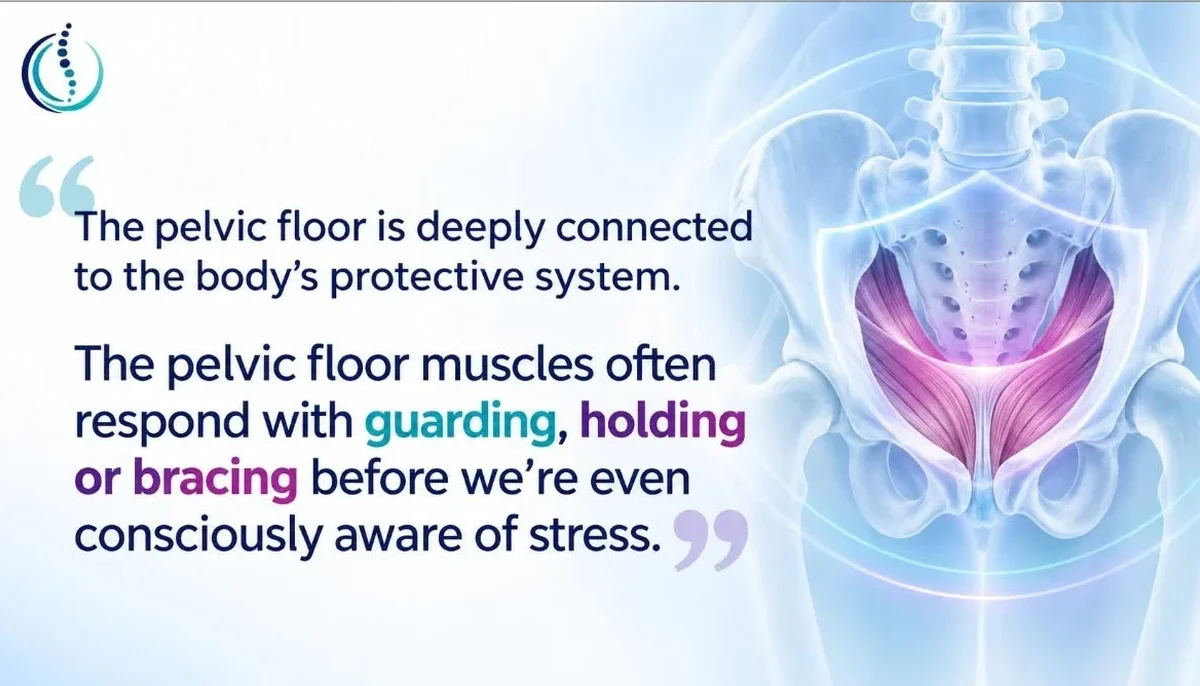
- Stress may be keeping your whole body in a guarded state
- The real driver may be somewhere else entirely
So you loosen the tight muscle, and your body simply recruits it again, because the reason it needed that muscle tight has not changed.
Three places people carry a pattern without knowing it
Breathing is the first. Most adults with a long-standing tension pattern breathe high in the chest, with the neck and shoulders doing work the diaphragm should be doing. They do not feel this; it is simply how breathing feels to them now. But a neck that lifts the ribcage twenty thousand times a day will be tight by evening no matter how much it is stretched.
The jaw is the second. Clenching and grinding are so common that people treat them as a personality trait. They are a guarding pattern, and the jaw does not guard alone. It pulls the neck, the neck pulls the shoulders, and the headache that shows up after a stressful week often starts there.
The hip that is always “out” is the third. A hip that needs to be put back every few weeks is usually not a hip problem. It is a hip that is being asked to stabilize for something else, the low back, the pelvis, the opposite foot, and it will keep going “out” until that something else is found.
A better question
That is why I think the useful question is not “How do we get this muscle to relax?” It is “Why does your body keep asking it to tighten back up?”
That second question is the part of this work I enjoy most. The place that hurts or feels tight is important, and we do not ignore it. But sometimes it is the compensation, not the source, and treating a compensation as if it were the source is how people end up stretching the same spot for ten years.
When someone comes to see me, I am not only asking where it hurts. I am looking at the bigger pattern. Why is your body doing this? What is it protecting? What keeps telling the nervous system that it needs this pattern? Those answers are why two people with the exact same complaint may need very different care.
How we look for the pattern
A first visit here is a full hour, and most of that hour is listening and looking. Your history matters: the fall in your twenties, the pregnancy, the years at a desk, the stretch of life when you were running on adrenaline. How you breathe matters. How the two sides of your body move matters. Whether your system can settle when it is given the chance matters.
My approach is gentle, neurologically focused, and a little different from what many people picture when they hear “chiropractic.” The adjustments are specific and light, because the goal is to give the nervous system better information, not to force anything. Where it helps, we add other support. And we pay attention to what changes between visits, because the pattern tells you more over time than any single exam can.
If you do not know exactly what is wrong
If you have been thinking, “I don’t know exactly what’s wrong, I just know I don’t feel like myself,” you are exactly the kind of person I enjoy sitting down with. You are not a difficult case. You have a pattern that has not been correctly read yet.
And if you have had the same stubborn tight spot for months or years despite stretching, massage, exercises or adjustments, I would like to help you look at the bigger pattern. We can start by listening to what your body has been trying to tell you.
One more thing, because people often arrive half-apologizing for how long they waited. You did not wait because you do not care. You waited because you had already tried things, and the things you tried were aimed at the spot that hurt. That is not a failure of effort. It is a difference in the question being asked, and it is the question I would like to ask with you.
~ Dr. Cassie
This article is general education, not medical advice for your situation.