
Conditions · Pelvic floor & the nervous system
The piece almost no one is checking: your pelvic floor.
If you have been told everything looks fine but you still feel wired, worn out, foggy or just “off,” there may be a part of the picture no one has looked at. The floor of your pelvis is packed with nerves and blood vessels that help set the tone for your whole nervous system. When it gets stuck, the rest of you can get stuck with it — and almost no one is connecting those dots.
Every adjustment here is gentle and fully clothed. There are no internal exams and nothing invasive. We work from the outside with a light-force instrument, the same way we care for the rest of your spine.
Symptoms that can trace back here
People are often surprised how many everyday complaints share this one hidden driver. You might recognize yourself in a few of these:
- feeling “tired but wired” — unable to fully relax or wind down
- low energy, brain fog, or a heavy, shut-down feeling
- bladder urgency, leaks, or going “just in case” all day
- constipation, bloating, or a gut that never settles
- tailbone, low-back or hip pain that keeps returning
- anxiety, a racing heart, or shallow breathing
- low libido and a body that feels disconnected
No single symptom proves anything on its own. Several of them together often point to a nervous system that cannot find its way back to calm.
Why so many people wait
Pelvic floor problems are common in women and men alike, yet most people never mention them. The symptoms get waved off as “normal aging,” “just what happens after childbirth” or “part of life,” and people often wait months or years before asking for help. If any of the list above sounds familiar, it is worth a conversation — it is not something you simply have to live with.
Why the pelvic floor runs so much
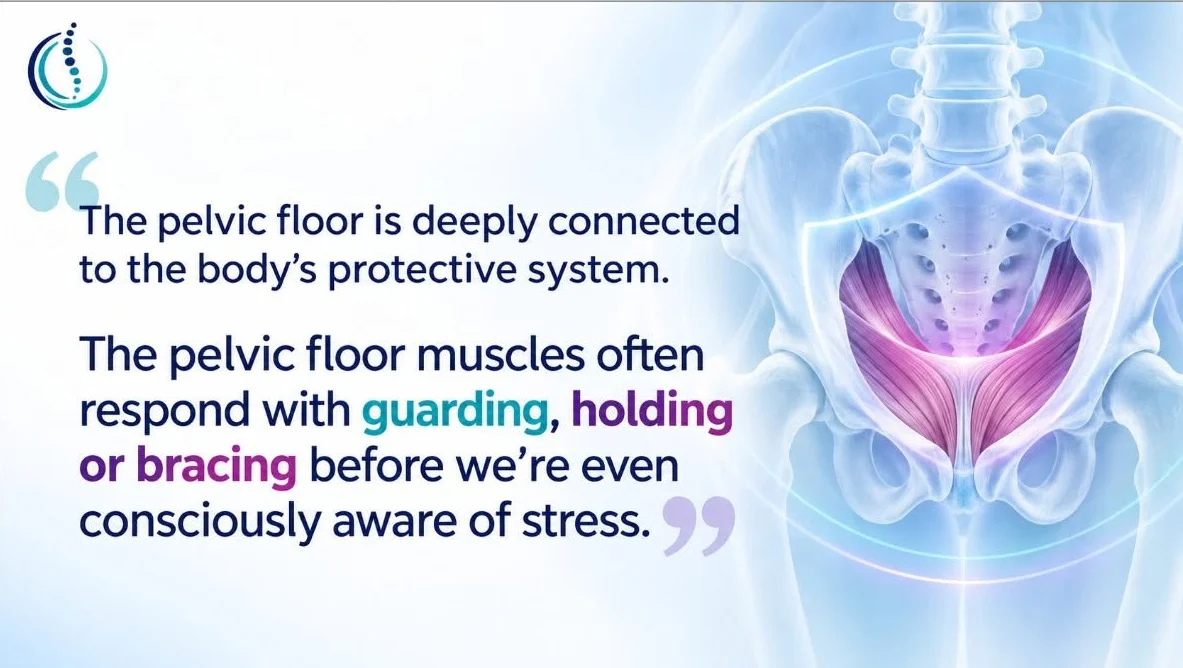
Picture the pelvic floor as a hammock of muscle at the base of your body. Running through it is some of your most important wiring and plumbing: the pudendal and pelvic nerves, and a share of the same calming system your vagus nerve belongs to.
Those nerves do two jobs at once. They carry signals — sensation, coordination, the “all clear” your brain is waiting for — and they help open and close blood flow to the area. When the floor is tight, braced or numb, both jobs suffer: the signals turn noisy and circulation drops. Your brain reads that as “still not safe,” and keeps the whole body on guard.
One connected system
The freeze loop, in plain terms
Most people know fight-or-flight. There is a third gear the body drops into when it has been overwhelmed for too long: a kind of shutdown, or freeze, run by the deepest and oldest branch of the vagus nerve.
In freeze, the body conserves and disconnects. The pelvic floor can go numb or stop coordinating — which is why leaks, retention, numbness and that “not quite in my body” feeling tend to show up together. And it becomes a loop: a stuck pelvic floor keeps feeding the freeze signal, and freeze keeps the floor stuck. Breaking that loop is the entire point of this work.
What gentle, fully clothed care does about it
We are not stretching or massaging the pelvic floor, and we are not doing anything internal. We work with the nervous system that controls it. Using a light-force instrument along the spine, sacrum and tailbone — with you fully clothed — we help release the tension pattern that is holding the floor on guard.
As those signals settle, many people notice the floor letting go: a calmer bladder and gut, easier breathing, steadier energy, and a body that feels like theirs again. Change is usually gradual, and it holds better the more the nervous system relearns calm.
What can change when the floor lets go
When a guarded pelvic floor releases, the benefits can build on one another:
- Clearer body sense — the sensors in the area may send cleaner signals to the brain about position and pressure.
- Better muscle function — overworked muscles can return to a healthier resting tone and coordinate with your breathing.
- Less nerve pressure — released tissue may give nerves like the pudendal nerve more room.
- More blood flow and drainage — circulation and lymph flow may improve, easing congestion and heaviness.
- A calmer nervous system — with fewer “not safe” signals reaching the brain, the whole body can settle.
Who this is for
Anyone stuck in the “all my tests are normal, but I do not feel right” gap — especially after a stretch of stress, an illness, childbirth, surgery or an old injury. It pairs naturally with our vagus nerve care and the HIDN® approach. If we are not the right fit for you, we will tell you plainly.
The nervous-system connection, explained
Questions people ask
Is any of this internal or unclothed?
No. Every adjustment is external and fully clothed. There are no internal exams and nothing invasive — we work with the nerves that control the pelvic floor, from the outside, with a gentle instrument.
Is this the same as pelvic floor physical therapy?
It is different, and the two can complement each other. Pelvic floor therapy often works the muscles directly. We work the nervous system that sets those muscles’ tone, so each can support the other.
Do I need a diagnosis first?
No. The first visit is a full history and a gentle exam to see whether this is part of your picture. If it is not, we will say so.
Is this for men and women?
Yes. The pelvic floor and its nerves matter for everyone, and these patterns show up across the board.
Often part of a plan for
Vagus nerve careAnxiety & nervous systemThe HIDN® MethodChronic pain
Individual results vary. Patient stories describe one person’s experience and are not a promise of outcome.
Start with the first visit — $150
A real hour on your history and a gentle, fully clothed exam to see whether your pelvic floor is part of the picture, then a plain-English plan. Insurance-free.
Request your first visit